
Staten Island: A Brief History
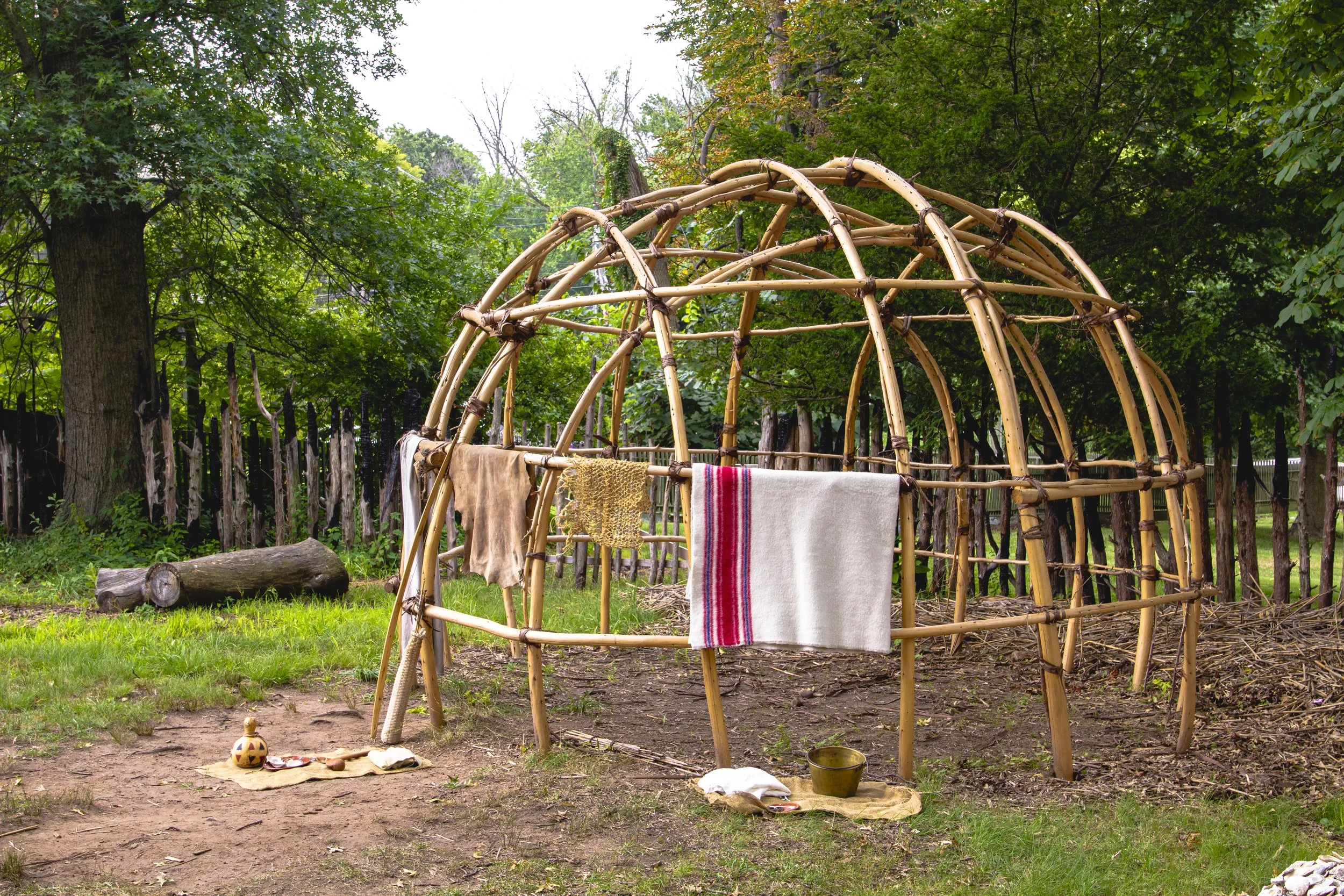
Native Encampment at Historic Richmond Town
For more than 10,000 years, the Lenape people lived and stewarded this region. Staten Island was known as “Aquehonga Manacknong.” Around 1620 the Dutch docked on the sandy shores, claiming ownership from the Lenape people. This resulted in three major attempts by the Lenape to maintain the use of the island. By 1655 the Indigenous leadership signed a treaty with the Dutch and were documented to have mostly left by 1670.

Depiction by Alonzo Chappel of S.I Peace Conference
For most of the 19th century, Staten Island was a beacon of agriculture and industry. Through its farms and factories, kept New York City fed and the stores well stocked. In 1856, the Staten Island Historical Society was formed to help preserve the history of the rapidly changing island - known today as Historic Richmond Town.
The beginning of the 20th century saw Staten Island become a part of New York City with the consolidation act. By the middle of the century, a new bridge was developed (Verrazzano-Narrows) which led to a massive influx of newcomers and growth.
Beginning in the late 1940’s, the City began dumping raw garbage in the wetland area known as “Fresh Kills.” Over many decades, Fresh Kills grew into the world’s largest landfill. It closed as a landfill on March 20, 2001. Today Freshkills is gradually returning to nature and transforming into Freshkills Park, marking a new era for Staten Island.
There’s much more history to be shared. Please check the following local organizations to learn more:
Historic Richmond Town
Staten Island Museum
Conference House
Tottenville Historical Society
Staten Island Borough Historian Thomas Matteo: sihistorian@aol.com
We welcome you to learn more from our community events as we look towards the future.

During 1776, Staten Island was occupied by British forces, with as many as 30,000 British soldiers being quartered on the island. Staten Island was mostly a loyalist stronghold, with patriots meeting in secret, dispatching intelligence about the movements of the British army. After years of occupation, many patriots fled the area to New Jersey and beyond, and the island was nearly completely deforested, with Staten Island lumber being used up by the British army.
Civil War envelope

Verrazzano-Narrows Bridge nearing completion from 1964